Finding the Right Funding for Your Startup
A good idea does not pay for itself. Building a prototype winning the customers and scaling up all cost money. The amount you need changes at every stage.
India’s startup ecosystem has grown strongly backed by government initiatives, incubators, investors and entrepreneurship programmes. Yet many early‑stage founders still struggle with the three questions: Which funding source fits my stage? Do I actually qualify? How do I write an application that convinces someone to back me?
This guide to startup funding in India answers those questions. It covers the types of funding the government schemes worth knowing about the role of DPIIT recognition a step‑by‑step approach to preparing your application and the mistakes that most often hold founders back.
Key Takeaways
• Startup funding in India comes in forms such as grants, seed funding, angel investment, venture capital and debt. Each type carries its conditions, repayment rules and ownership effects.
• Government grants are competitive and usually require milestones, reporting and specific rules on how the money can be used.
• A government‑backed initiative is not always a payment from the government. Some, such as a fund of funds invest through funds.
• Scheme status changes. Check the official notice before planning around any scheme, including SISFS.
• DPIIT recognition and incubation can improve your funding readiness. Neither guarantees investment.
What Is Startup Funding?
Startup funding in India is the money an entrepreneur raises to start grow or expand a business. Depending on the startup’s stage business model and financial needs it can come from government programmes angel investors, venture capital firms, banks or incubators.
Founders generally need startup funding in India to cover activities such as:
• Research and product development
• Building a proof of concept or prototype
• Testing a product with customers
• Hiring essential team members
• Marketing and customer acquisition
• Expanding operations and entering new markets
The source matters as much as the amount. Each option has its eligibility conditions, repayment obligations and ownership implications so the most attractive‑looking option is not always the right one.
Types of Startup Funding in India
Government Grants
Government grants give help for eligible startup activities. Depending on the scheme the money may support proof‑of‑concept development, prototype creation, product trials or other approved activities.
Best suited for: early‑stage startups that meet a scheme’s eligibility criteria.
Key consideration: grants are competitive and usually come with conditions, milestones, reporting requirements and rules on how the funds can be used.
Seed Funding
Seed funding helps a startup move from an idea or prototype towards commercialization. It can support product development, validation, early hiring and initial market entry. It may come through incubators angel investors, dedicated seed programmes or other eligible channels.
Best suited for: startups with a defined problem, a promising solution and evidence of market potential.
Angel Investment
Angel investors are individuals who invest their money in early‑stage businesses. Beyond capital they may offer industry knowledge, mentorship and business connections. In return they commonly receive equity or another agreed investment instrument.
Venture Capital
Venture capital firms invest in businesses with the potential for growth. These investments generally involve equity. Tend to suit startups with a validated business model, a sizeable market opportunity and plans, for rapid expansion.
Debt Financing
Loans allow a startup to get money while keeping ownership. Loans have a downside: the need to repay. Loans may have interest, collateral and other lender rules. Before picking debt look at your cash flow and how much you can repay.
Government Funding Schemes for Startups
Government programmes can give eligible startups money and connections. Each scheme has benefits, rules, application dates and ways to get money. Read each scheme carefully.
Startup India Seed Fund Scheme (SISFS)
The Startup India Seed Fund Scheme (SISFS) helps eligible startups get money for proof of concept, prototype work, product trials, market entry and commercialization via selected incubators. SISFS originally offered:
• Grants up to ₹20 lakh for proof‑of‑concept validation, prototype work or product trials.
• Investments up to ₹50 lakh through loans, convertible debentures or debt‑linked instruments for market entry, commercialization or scaling if the scheme rules allow.
These amounts are maximums, not guaranteed for every startup.
MeitY GENESIS
The Ministry of Electronics and Information Technology (MeitY) launched GENESIS to help technology startups, in Tier‑II and Tier‑III cities. Depending on the programme and selection rules support might be money, incubation, mentor ship and connections to the startup world.
AIC‑BIMTECH has posted details on GENESIS pilot funding. Cohorts and funding dates can change, so check the status directly with the institution before applying.
Startup India Fund of Funds 2.0
The Fund of Funds 2.0 initiative has a corpus of ₹10,000 crore to help startups get money. It is not a grant; it usually invests through eligible investment funds and those funds invest in businesses. That means founders must know two paths: applying straight to a government scheme or approaching an investment fund.
Key takeaway: A government‑backed initiative does not automatically give a startup money from the government. Always check how the funding is delivered.
DPIIT Recognition: Why It Matters
Recognition from the Department for Promotion of Industry and Internal Trade (DPIIT) can let eligible businesses use some Startup India benefits and schemes.
Generally the rules look at the startup’s age, turnover, structure and chance to innovate or improve. DeepTech startups may have rules. The limits and rules can change, so read the official Startup India guidelines.
Recognition does not mean funding. Each scheme and investor sets its needs.
How to Prepare a Strong Startup Funding Application
A funding application must do more than state how money you need. It must explain why the money is worth it and how it will be spent. Follow these six steps.
1. Define the problem. Describe the customer problem your startup solves and back it up with customer talks, industry research or other solid evidence that the problem exists.
2. Explain your solution. Describe your product or service what makes it unique. Why customers would pick it over current options.
3. Show the market potential. Identify your target customers, market size, competitors and revenue chances. Back big claims with data, not guesses.
4. Build a plan. Make estimates for revenue, costs, cash flow and the money you need. Explain how the money will be used and which goals it will help you hit.
5. Create a pitch deck. A pitch deck usually covers the problem, solution, market opportunity, business model, traction, competition, team, financial projections and funding need.
6. Verify eligibility and documents. Check the scheme rules, application dates, incorporation papers, DPIIT recognition rules if needed and any other papers the funding body asks for.
How Incubators Help You Become Funding-Ready
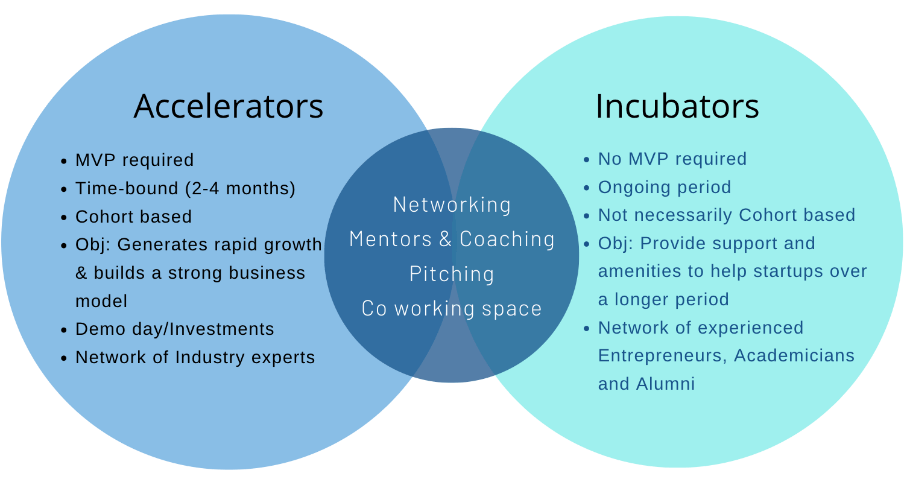
Money is one part of building a startup. Founders also need help checking ideas, building products learning about customers and making business plans.
Startup incubators can boost your readiness, for funding through mentorship, business planning, networking, investor links and help with finding the funding chances.
At AIC-BIMTECH founders can look at the programmes and support offered to find resources that fit their stage of development. Participation, funding access and selection rely on eligibility rules and current programme availability. Before applying read the information posted by AIC-BIMTECH and reach out to the institution about specific funding options.
Common Mistakes Founders Should Avoid
• Applying for funding without checking the eligibility requirements.
• Treating every government‑backed initiative as a grant.
• Requesting capital without a clear breakdown of expenses.
• Presenting revenue projections.
• Ignoring application deadlines or documentation requirements.
• Focusing on funding while neglecting customer validation and product development.
• Assuming that incubation or DPIIT recognition guarantees investment.
Avoiding these mistakes will not guarantee funding. It will make your approach more strategic.
Frequently Asked Questions
Is the Startup India Seed Fund Scheme still accepting applications?
The original SISFS application window closed on 31 May 2026. Check the official announcements before assuming the scheme is open for new applications.
Does a government‑backed scheme mean I get money directly from the government?
Not always. Some schemes give grants while others, like a fund of funds invest through investment funds that then invest in businesses. Check how each scheme delivers funding.
Does DPIIT recognition guarantee funding?
No. Recognition can help eligible businesses access Startup India benefits and schemes but each scheme or investor has its own requirements.
Which funding option suits an early‑stage startup?
It depends on your stage, business model, funding need and eligibility. Government grants and seed funding generally suit early‑stage startups that have a defined problem and evidence of market potential. Venture capital is more suitable for startups that have a validated business model and plans for growth.
Can an incubator guarantee investment?
No. Incubators can help you prepare through mentor ship, business planning, networking and guidance on funding opportunities. However programme participation, funding access and selection depend on eligibility criteria and current availability.
Conclusion
Startup funding in India offers pathways from government‑supported grants and seed programmes to angel investment, venture capital and debt financing. The right one depends on your stage, business model, funding need and eligibility.
For early‑stage founders the priorities are clear: validate the idea show market potential prepare financial projections and find funding that matches your goals. Combine that funding awareness with incubation support and careful planning and you improve your readiness to build a sustainable growth‑oriented business.